
If you've owned German Shepherds for any length of time, you already know the drill. The chronic scratching. The ears that flare no matter how many cleanings you do. The loose stools, the gas, the dull coat, the weight that won't settle. You've switched foods — maybe four or five times. You ran an elimination diet that "didn't work." And somewhere along the way someone told you it's just the breed, and you half-believed it because nothing you tried held.
Here's what's actually going on, and it's more specific than "the breed." Your German Shepherd's food reactions aren't just more common than other dogs' — they're amplified, and the amplification comes from three compounding factors stacked on top of each other: a structurally weaker skin barrier, a gut-immune system that's prone to letting food proteins through, and an immune response that overreacts once they do. That's the triad of vulnerability, and it's why a Shepherd suffers worse than the Lab next door eating the exact same kibble.
And there's a twist that derails more GSD elimination diets than any other single thing: a digestive condition this breed is uniquely prone to can make a correct diet look like a failure. So the path forward isn't another food switch. It's tracking your dog's food reactions and their digestive response together — two things at once — until the real pattern shows itself.
The Triad of Vulnerability — Why German Shepherds Get It Worse
Most breed blogs stop at "German Shepherds are prone to allergies." That's true but useless. What you actually need is why, because the mechanism tells you what to do about it. Three genetic vulnerabilities compound in this breed.
1. A structurally deficient skin barrier. German Shepherds carry mutations affecting skin-barrier genes — including PKP2 (plakophilin 2, identified through genome-wide work on canine chromosome 27), which helps hold skin cells together. Translated into plain terms: their skin is a leakier brick wall. Allergens penetrate more easily, moisture escapes, and once the skin is irritated it gets inflamed faster and stays inflamed longer. It's why GSD skin flares look so much angrier than other breeds'.
2. IgA deficiency and a more permeable gut lining. German Shepherds tend to run lower on a gut antibody called IgA — the immune system's first line of defence along the gut lining. Plain version: when IgA is low, partially digested food proteins slip across the gut wall more easily instead of being neutralised (this is what people often loosely call a "leaky gut" — a useful shorthand, though the term is still considered suggestive rather than firmly established). Those escaped proteins are exactly what the immune system learns to react to. So a low-IgA gut is a gut that's primed to become sensitised to food in the first place.
3. A hyper-reactive immune response. Once a trigger breaches the skin or the gut, the German Shepherd immune system tends to respond disproportionately — bigger, louder, more persistent inflammation than the same exposure would provoke in many other breeds.
Stack those three and the picture clicks into place. Allergens get in more easily (weak barrier), the dog gets sensitised more readily (a more permeable, low-IgA gut), and the reaction runs hotter once it starts (hyper-reactive immunity). German Shepherds don't just react more often — they react worse, which is exactly what frustrated owners have been seeing all along. (Bully breeds carry a different immune-and-skin profile that lands them in similar trouble by another route — we cover that in pit bull and bully breed food allergies.)
That same triad is exactly why so many German Shepherds turn into textbook recurrent yeast dogs. A leakier skin barrier and a hotter inflammatory response make the perfect terrain for secondary yeast overgrowth to take hold — and, worse, to keep coming back after every course of treatment, because the underlying inflammation never left. So if your GSD's defining problem is that musty, corn-chip smell and yeasty ears and paws that clear up and then relapse within weeks, that's not a separate mystery from the food picture — it's the triad doing what the triad does. The recurring yeast is often the visible edge of an unresolved food driver underneath. How diet actually feeds (or starves) that yeast cycle is its own subject, and we walk through it in full in dog yeast infections and food — for a Shepherd, read the two together, because in this breed the food-allergy story and the recurrent-yeast story are usually the same story.
What Food Allergies Actually Look Like in a German Shepherd
The triad also explains a presentation that's distinctive to the breed: Shepherds frequently get hit on both fronts at once — skin and gut — where many breeds lean one way or the other. Watch for:
- Skin and coat — chronic itching, recurrent hot spots, repeated bacterial skin infections, secondary yeast overgrowth (that musty, corn-chip smell — if recurrent yeast is your dog's main issue, our dog yeast infection and food piece has the full picture), recurrent ear infections, and over time, darkened or thickened skin.
- Gut — loose or inconsistent stools, excess gas, occasional vomiting, and trouble holding weight or condition.
- Coat quality — a dull, dry, or poor coat that no amount of grooming fixes.
Most food-allergic German Shepherds show their first signs before age four. And because the skin and gut signs arrive together, owners often chase them as two separate problems — a "skin thing" and a "stomach thing" — when they're frequently two faces of one underlying food driver.
The Most Common Food Triggers in German Shepherds
This is "what to suspect first," not a verdict — every dog is an individual, and the only way to confirm your dog's trigger is a structured trial. That said, the breed-level pattern is worth knowing because it tells you where to start:
- Beef — the most common food trigger across dogs generally, implicated in roughly a third of canine food-reaction cases (about 34% in the general-canine data), and beef reliably leads the pack.
- Dairy — the next most common in general canine data (around 17%), and easy to overlook because it hides in treats, supplements, and training rewards.
- Chicken — around 15% in general canine data, and the sneakiest of the three, because chicken turns up in a large share of commercial dog foods. "I already switched foods" often means switching to another chicken-based recipe.
These are the general-canine figures; breed-specific rates in German Shepherds may run higher given the triad above, but there isn't a clean GSD-specific prevalence number to quote, so treat these as "where to start looking," not a breed verdict. Notice, too, that they don't add up to 100% — many dogs react to more than one. That overlap is precisely why guessing fails and systematic tracking works.
Tracking turns months of food-switching guesswork into a few weeks of readable pattern data — which protein actually lines up with which flare. That's the whole reason we built Carnivore Lifestyles: log meals and symptoms in under two minutes a day, and let the app surface the connections you can't hold in your head. Start a free trial — 14 days, no credit card required.
The EPI Trap — When a "Failed" Elimination Diet Isn't the Diet's Fault
This is the single most important section for a German Shepherd owner, because it explains why so many GSD elimination diets "fail" for reasons that have nothing to do with the diet.
German Shepherds are the breed most predisposed to Exocrine Pancreatic Insufficiency (EPI) — and it's heritable in the breed. In plain language: the pancreas stops producing enough of the enzymes a dog needs to digest food. Without those enzymes, the dog can be eating perfectly good food and still effectively starving, because it can't break the food down and absorb it.
Here's why it wrecks elimination diets:
- EPI mimics food allergy. Weight loss, chronic loose stools, gas, and a poor coat look almost identical to a food sensitivity (and if you're still untangling the difference between a food allergy and a food sensitivity, that distinction is worth getting straight first). An owner sees those signs and reasonably assumes "allergy."
- EPI makes food allergy worse. When food isn't digested properly, larger, intact protein fragments reach the gut lining — and in a low-IgA Shepherd gut, that's more raw material for immune sensitisation. The two conditions feed each other.
- It creates a misdiagnosis loop. A German Shepherd with undiagnosed EPI can be run through one elimination diet after another, each one "failing" — not because the protein was wrong, but because the dog physically can't digest any protein well until the enzyme problem is addressed.
So if your GSD's elimination diets keep failing, the diet may not be the problem. EPI is diagnosed with a simple blood test (your vet may call it a TLI test) and managed with enzyme replacement — it is a medical condition, and diet alone does not treat it. The takeaway isn't to self-diagnose; it's to put EPI on the table with your vet before concluding that yet another food failed. (If you want the deeper picture on how gut and pancreas inflammation interact, our piece on dog pancreatitis, colitis and food triggers covers that mechanism — EPI is a different condition, but the gut-pancreas relationship is worth understanding.)
Why Switching Foods Keeps Failing
There's a reason the food-switching carousel never ends, and it's not bad luck. Switching from one commercial recipe to another isn't an elimination diet — it's a lateral move. Most commercial foods share overlapping proteins (chicken especially), so "new food" often still contains the very thing your dog reacts to. Even when it doesn't, you've changed a dozen variables at once, so even if the dog improves you can't tell what helped.
A real elimination diet is different in two ways: it uses a single novel protein (one your dog has rarely or never eaten), and it changes only that one thing, so the result is actually readable. Without those two features, you're not running a diagnostic — you're just shopping.
The German Shepherd Elimination Diet — and Why You Have to Track Two Things
Here's the breed-specific part. For most dogs, an elimination diet means tracking food in and symptoms out. For a German Shepherd, you track two response channels at once:
- Food reactions — skin signs and immune-type responses to specific proteins.
- Digestive/enzyme response — how well your dog is actually digesting, because of the EPI risk. If your vet has flagged EPI or started enzyme supplementation, you're tracking whether that is working, separately from the allergy question.
The protocol itself is the veterinary gold standard, and the step-by-step elimination diet and tracking method is the same for every breed: a strict single-novel-protein elimination diet for 8 to 12 weeks, nothing else — no treats, no flavoured chews, no table scraps, no flavoured medications unless your vet clears them. Skin signs are slow, so judge it at the full 8–12 weeks, not the first good week (the classic trap). Then comes a planned reintroduction, adding foods back methodically to confirm which ones actually trigger reactions. Elimination is a temporary investigation with a planned end — never your dog's forever diet, and never "the answer" on its own.
Dual-tracking is what makes it work for this breed. If you only track food reactions, an underlying enzyme problem can masquerade as an allergy and torpedo the whole trial. Track both, with dates, and the two stories separate out: this protein drives the skin flare; that enzyme dose fixes the loose stools. That separation is almost impossible to do in your head and straightforward to do on a chart — which is exactly the kind of two-channel, delayed-reaction pattern structured tracking is built to surface.
When to See Your Vet
This article is about finding patterns, not replacing your vet — and with this breed, the vet partnership matters more than usual. Book a visit if you suspect EPI (persistent weight loss despite a good appetite, chronic loose or greasy stools, ravenous hunger) so they can run the enzyme work-up; if there's an active skin or ear infection that needs treatment; or if you ever see signs of a true allergic emergency — facial swelling, hives, breathing trouble, collapse — which is a same-day emergency. The strongest approach is teamwork: your vet handles the medical work-up and clears active infections, while you run the food-and-digestion investigation that finds the long-term pattern. Show up with weeks of tracked data instead of "he's been off lately," and you give your vet something real to work with.
Frequently Asked Questions
Are German Shepherds more prone to food allergies?
Yes — and more importantly, they tend to get them worse. German Shepherds are one of a small group of overrepresented breeds — alongside Labradors, Westies, and Golden Retrievers — that account for a large share of canine food-reaction cases, and a triad of genetic factors (a weaker skin barrier, a more permeable low-IgA gut, and a hyper-reactive immune response) amplifies how severely they react once a trigger is in play.
Can EPI be mistaken for a food allergy?
Very easily. Exocrine Pancreatic Insufficiency — which German Shepherds are the most predisposed breed to — causes weight loss, loose stools, gas, and a poor coat that look almost identical to a food sensitivity. It can also make a correct elimination diet appear to fail. If your GSD's elimination diets keep falling flat, ask your vet about EPI testing (often a TLI blood test) before assuming the next food will be different.
What's the best food for a German Shepherd with allergies?
There's no universal answer, because the right food is whichever one excludes your dog's specific triggers — and the only way to find those is a structured single-novel-protein elimination trial with reintroduction. Beef, dairy, and chicken are the most common culprits in the breed and good first suspects, but tracking is what confirms it for your individual dog.
How long until I see improvement?
Commit to the full 8–12 weeks before judging a skin-focused elimination trial, because the skin barrier needs time to repair. Gut signs can settle faster. If EPI is in the mix, enzyme management can improve digestion relatively quickly once it's started — which is exactly why tracking food reactions and digestive response separately matters so much in this breed.
References
- Mueller RS, Olivry T, Prélaud P. 2016. "Critically appraised topic on adverse food reactions of companion animals (2): common food allergen sources in dogs and cats." BMC Veterinary Research, 12:9. PMID: 26753610.
- Tengvall K, Kierczak M, Bergvall K, et al. 2013. "Genome-wide analysis in German Shepherd dogs reveals association of a locus on CFA 27 with atopic dermatitis." PLOS Genetics, 9(5):e1003475 (PKP2 / skin-barrier locus). PMC3649999.
- Olivry T, Mueller RS, Prélaud P. 2015. "Critically appraised topic on adverse food reactions of companion animals (1): duration of elimination diets." BMC Veterinary Research, 11:225. PMID: 26310322.
- Westermarck E, Saari SAM, Wiberg ME. 2010. "Heritability of exocrine pancreatic insufficiency in German Shepherd dogs." Journal of Veterinary Internal Medicine, 24(2):450-452.
- Westermarck E, Wiberg M. 2003. "Exocrine pancreatic insufficiency in dogs." Veterinary Clinics of North America: Small Animal Practice, 33(5):1165-1179.
- VCA Animal Hospitals. "Exocrine Pancreatic Insufficiency in Dogs." Veterinary client reference.
Veterinary disclaimer: This article is for educational purposes only and does not constitute veterinary advice. Always consult with a qualified veterinarian before changing your pet's diet or discontinuing any prescribed treatments. Persistent itching, ear infections, and skin irritation can have multiple causes — including environmental allergens, parasites, bacterial or yeast infections, and structural conditions — some of which require specific veterinary treatment. Breed-specific sensitivities vary by individual dog; genetics, environment, and secondary conditions all shape what your pet reacts to. Persistent or severe symptoms should always be evaluated by a veterinary professional. This article does not replace a professional veterinary examination. If you observe signs of anaphylaxis, severe vomiting, collapse, or rapid deterioration, seek emergency veterinary care immediately.
Related Articles
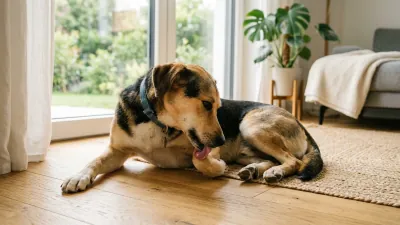
Dog Yeast Infections and Food: Why It Keeps Coming Back
Recurrent yeast in the ears or paws is rarely a skin problem alone. Here's the diet-to-yeast chain, and how to find what's feeding it.
Read Article →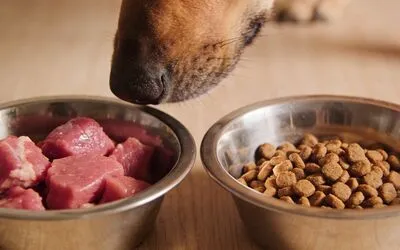
Dog Food Allergy vs Sensitivity: What's the Difference?
They're not the same thing, and the distinction changes what you track and how long you wait. Here's how to tell them apart.
Read Article →
The Dog Elimination Diet: How to Actually Track It
The 8–12 week protocol, every failure point, and how structured tracking turns a long trial into a readable answer.
Read Article →