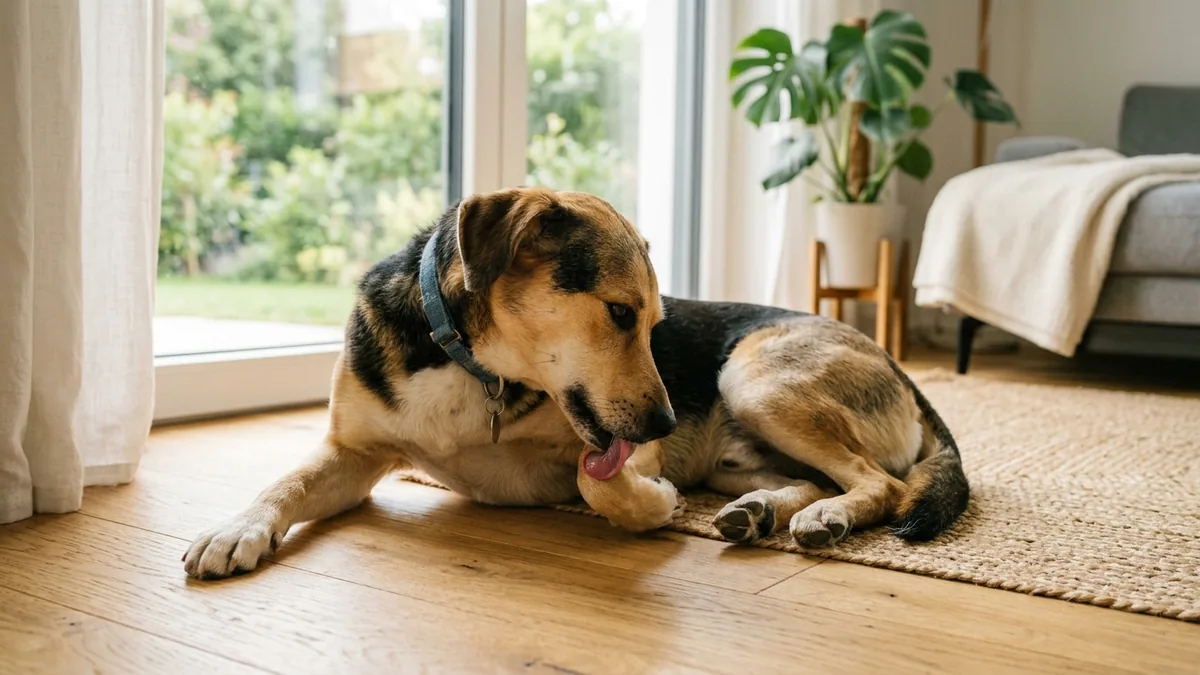
You've done the drops. You've done the medicated wipes. Maybe a course of antifungal shampoo, a bottle of ear cleaner that smells like a chemistry lab, and that brief, hopeful week where your dog finally stopped chewing their paws raw. And then it came back. The musty, corn-chip smell off the paws. The greasy, head-shaking ears. The rust-coloured saliva stains creeping up the legs again. If you're starting to think it's "just the breed" or "just the season," there's something worth knowing first. (Some breeds really are more prone to this cascade — West Highland Terriers are a textbook example — but "the breed" is rarely the whole story.)
Here's the part most people never get told: recurrent yeast on a dog is very often fed by what's in the bowl. Carbohydrate load and food-sensitivity-driven inflammation can both create the exact conditions yeast thrives in — which is why treating the skin alone keeps relapsing. You clear the symptom on the surface, but the fuel underneath is still there. The durable way out usually isn't another shampoo. It's changing what your dog eats and tracking how their body responds, so you can finally see the pattern that topical treatment hides.
This article is about that connection — the diet-to-yeast chain — and how to actually find your dog's trigger instead of guessing for another year.
What Yeast Overgrowth Actually Looks Like on a Dog
Yeast lives on every healthy dog. The problem isn't its presence — it's overgrowth, when the normal yeast population (usually Malassezia, a yeast that's a normal skin resident) multiplies past what the skin can keep in check. Once it does, it tends to announce itself the same way again and again:
- Paws — obsessive licking and chewing, often with that unmistakable musty, corn-chip or popcorn smell. The fur between the toes may stain a rusty brown from saliva. (If paw-licking is the sign you're noticing most, that's a common entry point to this whole picture.)
- Ears — greasy or waxy discharge, a yeasty odour, head-shaking, and scratching at the ear base. Recurrent "ear infections" that clear and return are a classic flag.
- Skin folds and underside — armpits, groin, neck folds, and belly can go red, greasy, darkened, or thickened ("elephant skin") over time.
- General coat — a sour or musty smell that comes back a day or two after a bath, plus itchiness that no flea treatment touches.
The thing owners rarely connect is that these are usually the same problem showing up at different sites. The ear yeast, the paw yeast, the belly yeast — it's frequently one overgrowth, fed by one underlying driver, popping up wherever the skin is warmest, dampest, and most irritated.
The Diet Connection — Why Food Can Fuel Yeast Overgrowth
This is the part the anti-yeast shampoo aisle skips. There are two well-recognised ways food can contribute to yeast overgrowth, and most dogs dealing with the recurring kind have a bit of both going on.
1. Carbohydrate load as available fuel. Yeast metabolises sugars. A diet heavy in rapidly digestible carbohydrates can raise the substrate available to skin and gut microbes, and many owners and integrative vets report flares tracking with high-carb kibble. It's worth being honest about the evidence here: the "carbs feed yeast" idea is mechanistically plausible and widely observed, but it's not settled, RCT-grade science. So think of carbohydrate load as a contributing factor that can create conditions for overgrowth — not a guaranteed switch you flip.
2. Food sensitivity → immune response → yeast overgrowth. This is the better-documented chain, and the order matters. When a dog is sensitive to a food, eating it triggers an immune reaction. That immune-driven inflammation both weakens the skin barrier and disrupts the local immune defences that normally keep resident yeast in check — so the Malassezia already living on the skin is allowed to overgrow. The food sensitivity comes first, the immune response is the middle step, and the yeast overgrowth is downstream of both — the food doesn't feed the yeast directly. In veterinary dermatology, Malassezia overgrowth is recognised as almost always secondary — it rides in on top of an underlying driver like food sensitivity or allergic skin disease, rather than starting on its own.
Put those together and you get the diet-to-yeast picture: a food the dog reacts to sets off the immune response that inflames and weakens the skin, carbohydrate load adds fuel, and yeast — already present and waiting — moves in. Chicken is worth a specific mention here — not because it's the top trigger (beef and dairy are actually reported more often in dogs) but because it turns up in a huge share of commercial foods, which makes "I already switched foods" a lot less reassuring than it sounds. If the new food still contains the protein your dog reacts to, the inflammation-then-yeast chain just keeps running.
One honesty flag before we go further: because yeast overgrowth is usually secondary, food is rarely the only factor. Environmental allergies, humidity, parasites, hormonal conditions, and anatomy (think floppy, hairy ears) all play a part. Diet is one of the most controllable levers — and often a decisive one — but it isn't a magic cure, and an active infection still needs proper veterinary treatment.
Why It Keeps Coming Back Despite Treatment
Antifungal drops, wipes, and shampoos work on the yeast that's there right now. They're genuinely useful — sometimes essential — for knocking down an active flare. But they don't touch the reason the yeast had room to overgrow in the first place. Treat the symptom, leave the fuel, and the overgrowth simply rebuilds once the medicated phase ends. That's the relapse loop: clear, calm, relapse, repeat — every few weeks or every change of season.
There's a second reason the cycle stays invisible: timing. Food reactions in dogs are often delayed, building over days as exposure accumulates rather than flaring the instant the bowl goes down. A dog can eat its trigger on Monday and not look meaningfully worse until later in the week. So when the yeast comes roaring back, it almost never lines up neatly with a single meal — which is exactly why owners blame the weather, the grass, the bath products, or the breed, and almost never the food. The connection is real; it's just spread out in time, and the human brain is terrible at spotting patterns that slow.
Tracking food alongside yeast signs by site is what turns months of guessing into a few weeks of readable data.
That's the whole reason we built tracking into Carnivore Lifestyles — so you can log meals and symptoms in under two minutes a day and let the app surface the delayed connections you can't hold in your head. You can start a free trial here — 14 days, no credit card required.
How to Tell If Food Is Driving Your Dog's Yeast
You can't confirm a food driver by intuition, but you can read the clues that make it likely:
- It's recurrent, not one-off. A single ear infection after a swim is probably situational. Yeast that clears with treatment and returns within weeks points to an ongoing internal driver.
- It's multi-site. Paws and ears and belly folds, rather than one isolated spot, suggests a systemic fuel rather than a local accident.
- Topical treatment "works but doesn't last." If every antifungal round helps and then fades, you're treating downstream of the cause.
- It flares regardless of season or environment. Purely environmental yeast often tracks with humidity, pollen, or swimming. Food-fuelled yeast keeps grumbling along year-round.
- Other food-sensitivity signs ride alongside it — loose stools, gas, recurrent itch, hot spots.
None of these prove food on their own. They just tilt the odds — and tell you a structured food trial is worth running.
The Elimination Approach — 8–12 Weeks, One Novel Protein
The gold-standard way to find a food driver is a strict elimination diet: feed a single novel protein (one your dog has rarely or never eaten — kangaroo, rabbit, and venison are common choices, depending on what they've had before) and nothing else — no treats, no flavoured chews, no table scraps, no flavoured medications unless your vet okays them — for 8 to 12 weeks.
Why so long? Because skin is slow. Gut-driven signs can settle in a couple of weeks, but skin and yeast often take the full 8 to 12 weeks to meaningfully calm down, because the skin barrier has to repair and the overgrowth has to lose its fuel and recede. Cut the trial short at the first good week — the trap most DIY attempts fall into — and you'll never know whether it was working.
A few rules that make or break it:
- Strict means strict. One forgotten cheese cube or flavoured heartworm chew can reset the whole trial.
- It's a diagnostic, not a destination. Elimination is a temporary investigation with a planned reintroduction afterward, where you methodically add foods back to confirm which ones trigger reactions. It is not meant to be your dog's forever diet.
- Run it with your vet's input, especially if there's an active infection to clear first or if you're managing other conditions.
What to Track
The elimination diet only pays off if you can actually read the result, and that's where most home attempts collapse — good intentions, no record, no pattern. Keep it simple and log three things daily:
- Food in — the protein, any extras, treats, chews, supplements, and flavoured medications. Everything that crosses your dog's lips.
- Yeast signs by site — paw licking, ear odour or discharge, head-shaking, skin redness or smell, saliva staining. A quick 1–10 severity score per site beats a vague "seemed itchy."
- Timeline — dates, so delayed reactions become visible. A flare three or four days after a slip-up is meaningless in your memory and obvious on a chart.
After a few weeks, the lines start to talk. The flares that seemed random cluster around specific inputs. That's the moment the whole frustrating history reorganises itself into something you can finally act on — and it's exactly the kind of delayed, multi-day pattern structured tracking is built to surface.
When to See Your Vet
To be clear: this article is about finding the driver behind recurring yeast, not about treating an active infection yourself. An active, painful, or rapidly worsening yeast infection is a veterinary matter — it may need prescription antifungals, and yeast frequently travels with a secondary bacterial infection that needs its own treatment. See your vet if your dog has significant ear pain or balance changes, raw or bleeding skin, a sudden severe flare, or signs of illness beyond the skin. The smartest play is a partnership: let your vet clear the active flare and rule out other causes, while you run the food investigation that stops it coming back. Walking into that appointment with weeks of tracked data — instead of "he's been itchy lately" — changes the conversation entirely.
Frequently Asked Questions
Can food cause yeast infections in dogs?
Food doesn't usually cause yeast outright — yeast is normally already present, and overgrowth is almost always secondary to another driver. But food can strongly contribute: a carbohydrate load may add fuel, and when a dog reacts to a food it's sensitive to, the resulting immune response drives inflammation that weakens the skin barrier and lets the yeast already living there overgrow. In other words, the food doesn't feed the yeast directly — it triggers a sensitivity, the immune system responds, and that's what opens the door. So diet is often a major, controllable factor behind recurrent yeast, even if it's rarely the sole cause.
What foods make dog yeast worse?
The two usual suspects are high carbohydrate loads (which can feed yeast) and any protein your specific dog is sensitive to (which sets off the immune response that drives inflammation). Chicken is worth watching — not because it's the most common trigger (beef and dairy actually rank higher in dogs) but because it turns up in most commercial foods, so "I already switched" often doesn't remove it. There's no universal "yeast food" list, though — the point is to find your dog's trigger through a structured trial, not to ban a generic ingredient.
Why does my dog's yeast keep coming back?
Because antifungal drops, wipes, and shampoos clear the yeast that's there now but don't remove the underlying fuel. If a food driver is still in the bowl, the overgrowth simply rebuilds once treatment stops. Breaking the loop usually means addressing the diet, not just re-treating the skin.
How long until a diet change helps?
Skin and yeast are slow to settle — expect to commit to a full 8–12 week elimination trial before judging it, since the skin barrier needs time to repair and the overgrowth needs time to recede. Gut-related signs can improve faster, but don't call a skin trial a failure before the 8-week mark.
References
- Bond R, Morris DO, Guillot J, et al. 2020. "Biology, diagnosis and treatment of Malassezia dermatitis in dogs and cats: Clinical Consensus Guidelines of the World Association for Veterinary Dermatology." Veterinary Dermatology, 31(1):27-e4. PMID: 31957943.
- Mueller RS, Olivry T, Prélaud P. 2016. "Critically appraised topic on adverse food reactions of companion animals (2): common food allergen sources in dogs and cats." BMC Veterinary Research, 12:9. PMID: 26753610.
- Olivry T, Mueller RS, Prélaud P. 2015. "Critically appraised topic on adverse food reactions of companion animals (1): duration of elimination diets." BMC Veterinary Research, 11:225. PMID: 26310322.
- Merck Veterinary Manual. "Malassezia Dermatitis in Dogs." Veterinary dermatology reference.
Veterinary disclaimer: This article is for educational purposes only and does not constitute veterinary advice. Always consult with a qualified veterinarian before changing your pet's diet or discontinuing any prescribed treatments. Persistent itching, ear infections, and skin irritation can have multiple causes — including environmental allergens, parasites, bacterial or yeast infections, and structural conditions — some of which require specific veterinary treatment. Persistent or severe symptoms should always be evaluated by a veterinary professional. This article does not replace a professional veterinary examination. If you observe signs of anaphylaxis, severe vomiting, collapse, or rapid deterioration, seek emergency veterinary care immediately.
Related Articles
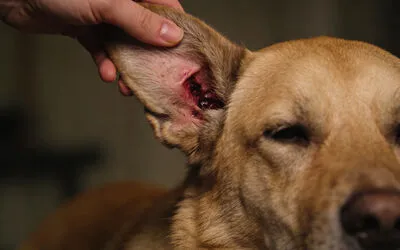
Dog Ear Infections and Food: The Recurring Connection
Ear infections that clear and come back are one of the most reliable signs of a food driver — and one of the most commonly missed.
Read Article →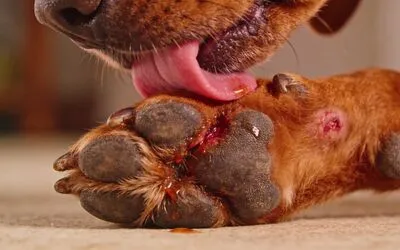
Why Your Dog Licks Their Paws (And What Food Has to Do With It)
Obsessive paw-licking is rarely a habit. It's usually the first visible edge of an itch that starts in the bowl.
Read Article →
The Dog Elimination Diet: How to Actually Track It
The 8–12 week protocol, every failure point, and how structured tracking turns a long trial into a readable answer.
Read Article →