
Your Lab is scratching again. Not the quick after-a-walk scratch — the kind where they wake you at 2 a.m. gnawing at their paws. The ear infections keep coming back, three rounds of antibiotics this year already. Their belly is pink and blotchy. And they're hungry — always, relentlessly hungry — which you've written off as "just being a Lab."
You've tried switching food. Maybe you went grain-free, or cut out chicken because someone in a Facebook group said chicken was the problem. You might be spending $80 to $150 a month on Apoquel or Cytopoint, and while those drugs take the edge off, the itching comes back the moment you stop. You've been told that Labs are just prone to this stuff. That it's "breed-typical." That some dogs are just itchy.
Here's what nobody told you: your Lab's constant hunger and their constant itching might share the same genetic root. And until you investigate food as the source, no amount of medication will fix what's driving the cycle.
A quick note on terminology: "Food allergy" is the term most of us search for, and you'll see it in our headings for that reason. But true food allergies — immediate IgE-mediated reactions like hives or facial swelling — are actually rare in dogs. What most Labs experience are food sensitivities: delayed immune reactions that show up as itching, ear infections, and gut issues hours or days after eating a trigger food. Throughout this guide, we'll use "sensitivity" and "trigger food" for accuracy. "Allergy" appears where it reflects common usage rather than clinical reality.
Why Labs Top Every Allergy List
Labrador Retrievers held the title of America's most popular breed for 31 consecutive years (1991–2022) according to AKC registration data — the longest reign of any breed. They remain among the most popular breeds and the most commonly owned. There are more Labs in more homes than any other breed, and that matters for food-sensitivity statistics in a way most people don't think about.
Labs are among the most frequently represented breeds in canine adverse food reaction studies. Part of that is sheer numbers — with more Labs in the population, more Labs show up in veterinary clinics and research cohorts. But that's not the whole story.
The general dog population experiences food sensitivities at an estimated rate of 10 to 15 percent. In Labradors, estimates from veterinary dermatology literature place that figure closer to 20 to 30 percent — roughly double the average. This isn't simply a function of being popular. Labs have documented genetic predispositions that make their immune systems more reactive to food proteins than many other breeds.
Several breed-specific factors compound the problem:
- Dense double coat. Labs were bred to retrieve waterfowl in cold water, and that thick, water-resistant coat is great for the job. But it also traps moisture, warmth, and allergens against the skin. Inflammation that might resolve quickly on a short-coated breed simmers and builds under a Lab's dense undercoat.
- Love of water. Swimming, puddle-jumping, sprinkler-chasing — Labs stay wet more often than most breeds. Chronic moisture against already-inflamed skin creates conditions for secondary bacterial and yeast infections that amplify the itch.
- Floppy ears. Those soft, folded ears restrict airflow to the ear canal. When food-driven inflammation triggers excess wax production, moisture and bacteria build in a warm, closed environment. This is why Labs are the number one breed for chronic ear infections — and why those ear infections keep coming back after treatment.
- Genetic immune profile. Beyond coat and anatomy, Labradors carry immune system characteristics that predispose them to overreactive responses to dietary proteins. And one specific gene may tie their famous appetite directly to their sensitivity susceptibility.
That gene deserves its own section.
The POMC Gene — Where Hunger Meets Allergies
If you've owned a Lab, you know the hunger. The counter-surfing. The speed eating. The look they give you at dinner that says they've never been fed in their entire life, despite finishing their bowl forty seconds ago. Most owners chalk this up to personality. Many vets call it breed-typical behavior.
But in 2016, researchers at the University of Cambridge published a study in Cell Metabolism (Raffan et al.) that identified something more specific: a mutation in the POMC gene — short for pro-opiomelanocortin — that affects approximately 25% of Labrador Retrievers.
Here's what the mutation does. The POMC gene is responsible for producing a set of hormones that regulate several critical systems, including the signals that tell the brain "you're full — stop eating." The mutation deletes a section of this gene, disrupting the production of those satiety hormones. The result: affected Labs genuinely don't receive the "full" signal that other dogs get. They aren't being dramatic. They aren't badly trained. They are, on a hormonal level, always hungry.
This finding is well-established science, and it explained something Lab owners and breeders had observed for generations.
But here's where it gets interesting for sensitivity-prone Labs.
POMC doesn't just regulate hunger. The same gene is involved in producing hormones that modulate the immune system and inflammatory pathways — including melanocyte-stimulating hormone (MSH), which plays a role in regulating immune responses and inflammation. Researchers are now investigating whether the same deletion that disrupts satiety signaling also affects the immune regulation side of the POMC pathway.
To be clear: the direct link between the POMC mutation and increased food sensitivity susceptibility in Labradors is emerging science, not established fact. No peer-reviewed study has yet proven a causal relationship between the POMC deletion and food sensitivity rates in Labs. But the biological plausibility is strong — the same gene, the same deletion, and two seemingly separate problems (insatiable hunger and elevated sensitivity rates) that occur in the same breed at unusually high rates.
What this means for you as a Lab owner: if your dog is one of the 25% carrying this mutation, their constant hunger and their sensitivities may share a genetic root. That doesn't change the treatment path — you still need to identify specific triggers through elimination and tracking. But it reframes the situation. Your Lab isn't being difficult. Their biology is working against them on two fronts at once. And understanding that changes how you approach both their diet and their symptoms.
Common Food Triggers in Labradors
So what, specifically, are Labs reacting to?
According to breed-specific tracking data collected across large databases of Labrador Retrievers, the most commonly identified trigger foods in the breed are:
- Chicken: approximately 40% of reported food reactions
- Beef: approximately 35%
- Dairy: approximately 22%
- Wheat and grains: approximately 15%
Important context on these numbers: These percentages come from breed-specific tracking databases and clinical observations, not from peer-reviewed systematic reviews. They reflect patterns observed across large numbers of Labs in non-peer-reviewed databases, but they have not been validated through controlled clinical trials. Individual dogs vary significantly, and these figures should be treated as directional estimates rather than precise rates.
For comparison, the most-cited peer-reviewed data on canine food reactions across all breeds (Mueller et al., BMC Veterinary Research 2016) shows a different picture:
- Beef: 34% of adverse food reactions
- Dairy: 17%
- Chicken: 15%
- Wheat: 13%
- Lamb: 5%
The notable difference: chicken appears to be a substantially larger trigger in Labradors than in the general dog population — nearly three times the general rate. Beef remains high in both datasets. This may relate to Labs' specific immune profile, or it may reflect the fact that chicken is present in the vast majority of commercial dog foods and treats (PCR studies have detected chicken DNA in approximately 65 to 73 percent of tested commercial foods, including products that don't list chicken as an ingredient (Willis-Mahn et al. 2022; Fossati et al. 2019)).
The takeaway isn't to immediately cut chicken from your Lab's diet. As we explain in our guide on why dropping chicken may do nothing for your dog, removing one protein without a systematic elimination process is guesswork. Your Lab might be in the 40% that reacts to chicken — or they might be in the 35% that reacts to beef, or the 22% that reacts to dairy. The only way to know is to test and track methodically.
The 5 Signs Your Lab Has a Food Allergy
Despite the term most people search for, these signs don't point to a true food allergy — true allergies are rare and immediate (hives within minutes, facial swelling). What these 5 patterns signal is food sensitivity: delayed, cumulative immune reactions. But since Labs rarely have true allergies and very often have sensitivities, these are the 5 signals worth watching for:
1. Chronic Ear Infections That Keep Coming Back
Labs are the number one breed for otitis — inflammation and infection of the ear canal. One ear infection is common enough. But if your Lab gets ear infections three, four, five times a year — and they clear up with treatment but return within weeks — that's not just bad luck. Chronic recurring ear infections are one of the strongest signals of an underlying food sensitivity. The trigger food drives systemic inflammation, which increases wax and moisture in those already-vulnerable floppy ears, creating a cycle that antibiotics alone can't break. For the full picture on this connection, see our deep dive on ear infections and food in dogs.
2. Paw Licking and Chewing
If your Lab is constantly working on their paws — especially between the toes — pay attention. This is one of the most common presentations of food-driven itching. On yellow and white Labs, look for brown or rust-colored staining on the fur around the paws. That discoloration comes from porphyrin in saliva, and it's a visible record of chronic licking even when you don't catch them in the act.
3. Belly Redness and Rash
The belly is one of the least furry areas on a Lab, which makes it the first place inflammation becomes visible. If your Lab's belly is persistently pink, red, or rashy — especially along the groin and inner thighs — food-driven inflammation is a strong possibility. This area is also prone to secondary bacterial infections when the skin barrier is compromised by ongoing sensitivity reactions.
4. Year-Round Itching
This is the key distinction. Environmental allergies — pollen, grass, mold — are seasonal. They flare in spring and fall, and they ease in winter. Food sensitivities don't follow a calendar. If your Lab is itching in January, when pollen counts are near zero and the grass is dormant, food is very likely involved. Year-round symptoms that don't follow seasonal patterns are one of the clearest indicators that something in the diet is driving the reaction. For a detailed comparison of seasonal vs. food-driven symptoms, see our guide on spring allergies vs. food allergies in dogs.
5. GI Symptoms Alongside Skin Issues
When skin problems come paired with gut symptoms — soft stool, excessive gas, occasional vomiting, gurgling stomach — the combination is a strong signal that food is the culprit. Environmental allergens rarely cause significant GI symptoms. But a food trigger activates the immune system right where it encounters the food: in the gut. The inflammation radiates outward to the skin while simultaneously disrupting digestion. If your Lab has both itchy skin AND digestive issues, food should be the first suspect. Research on the gut-brain connection in dogs also suggests that food-driven gut inflammation can affect mood and behavior — restlessness, irritability, and decreased energy may be part of the same picture.
The key pattern to remember: food sensitivities are year-round. If your Lab's symptoms persist through every season without a break, food is more likely than environment. If symptoms appear only in spring and fall, environmental triggers are more probable. Many Labs have both — and untangling the two requires systematic tracking over time. Understanding the difference between food allergy and food sensitivity is the first step.
Pet Health Quiz
Allergy or Sensitivity? Take the 60-second quiz.
12 quick questions about your pet’s symptoms. You’ll see what your answers point to — allergy, sensitivity, or both — and what to do next.
Take the QuizThe Lab Elimination Diet — Managing a Food-Obsessed Breed
The elimination diet is the gold standard for identifying food triggers. The protocol itself is straightforward: feed a single novel protein your dog has never eaten (venison, kangaroo, rabbit, or similar) plus one simple carbohydrate for 8 to 12 weeks. No other food, treats, or supplements. If symptoms improve, you've confirmed food is the driver. Then you reintroduce proteins one at a time to pinpoint the specific triggers.
Simple in theory. In a Labrador, it's a different experience entirely.
Labs are the most food-motivated breed most owners will ever live with. And if your Lab carries the POMC mutation, they're not just motivated — they're genuinely, hormonally incapable of feeling satisfied. Running a strict elimination on a dog that will eat anything out of any trash can, off any counter, out of any other pet's bowl, and from any child's hand is one of the hardest dietary challenges in pet ownership.
Here's how to make it work:
Secure every food source. This isn't about discipline — it's about physics. Labs are large, clever, and determined. All food goes behind closed doors or above counter height. Trash cans need lids that latch. One accidental exposure to a trigger protein resets the elimination clock. Three weeks of progress can be erased by one stolen slice of pizza.
Switch to novel-protein treats only. Training treats, dental chews, pill pockets, and even flavored medications often contain chicken, beef, or dairy. Every single thing that enters your Lab's mouth during the elimination period must be from the novel protein source. Yes, this is inconvenient. Yes, it's necessary.
Manage multi-pet households. Labs will eat other pets' food. Feed all animals separately, supervise meals, and pick up bowls immediately. Cat food is especially problematic — Labs find it irresistible, and it's almost always chicken or fish-based.
Account for POMC hunger. If your Lab is in the 25% with the mutation, standard portions of novel protein may leave them desperately hungry. Work with your vet to increase the volume of the novel protein diet to manage hunger without breaking the elimination. A hungrier Lab is a Lab more likely to break into the pantry.
Brief every human in the house. This is where more elimination diets fail than anywhere else. Kids drop food. Guests offer treats. Grandparents slip biscuits under the table. One well-meaning family member who doesn't understand the protocol can undo weeks of careful work. Everyone who interacts with your Lab needs to know: nothing but the prescribed food, no exceptions, no "just this once."
The daily tracking advantage during elimination is significant. Logging every meal, every treat, every symptom — and every accidental exposure — lets you see patterns that memory alone can't hold. Did symptoms flare three days after your Lab got into the neighbor's dog food? That's a data point. Did the ear scratching start improving at week four? That's another. Gradual improvement over weeks is often invisible day-to-day but clear in logged data. For more on why standard kibble-switching fails where elimination diets succeed, see our guide on hydrolyzed and elimination diets.
Reintroduction — One Protein at a Time
If your Lab's symptoms have improved after 8 to 12 weeks on the novel protein diet, you've confirmed that something in their previous diet was driving the problem. Now you need to find out exactly what.
The reintroduction protocol is methodical: add one protein at a time, every two weeks, while continuing to track symptoms daily.
Start with the lowest-probability trigger. If population data suggests lamb causes reactions in roughly 5% of dogs, begin there. Feed the novel protein diet plus lamb for two weeks. Track everything — skin condition, ear status, paw licking, stool quality, energy levels. If no symptoms appear, lamb goes on the "safe" list. Move to the next protein.
Work your way up toward the higher-probability triggers — dairy, beef, and chicken — last. Watch carefully for delayed reactions. In dogs, food sensitivity symptoms often don't appear for 24 to 72 hours after exposure, and cumulative effects on skin and itching can build over days or even weeks. A reaction to reintroduced beef on Monday might not show as increased ear scratching until Thursday. This is why daily tracking through the reintroduction phase is not optional — it's the entire point.
For Labs specifically, the reintroduction period is where vigilance matters most. A food-obsessed dog is more likely to find accidental exposures during the weeks you're carefully testing one protein at a time. One unauthorized snack blurs the data for that entire two-week window.
The goal of reintroduction is to build a "safe foods" list that's specific to YOUR Lab. Not based on breed averages. Not based on what worked for someone else's Lab in a Facebook group. Your dog's individual immune system, tested systematically and tracked daily. Other breed-specific guides — like our articles on French Bulldog food allergies and Westie food allergies — follow the same individual-testing principle, because no two dogs within any breed react to the same foods.
Track Your Lab's Food and Symptoms
Your Lab eats everything. Now track everything — and find out what's making them itch.
Labs create more dietary variables than almost any other breed. Their food obsession means more accidental exposures, more treats from well-meaning strangers, more stolen snacks. Daily tracking turns that chaos into data.
Log meals, treats, and symptoms every day. The app's AI pattern analysis works across a 7-day rolling window, catching delayed reactions that happen days after a trigger exposure — the kind of connections no human could reliably hold in memory across weeks and months of elimination and reintroduction.
Track when symptoms flare. Track when they improve. Track the accidental exposures that inevitably happen with a Lab. Over time, the patterns emerge — and they're specific to your dog.
Stop guessing. Start tracking. Log meals and symptoms in under 2 minutes a day — the app spots the delayed patterns memory can't.
Start 14-Day Free TrialFrequently Asked Questions
Are Labradors prone to food allergies?
Yes. Labradors are among the most frequently represented breeds in canine adverse food reaction studies, with estimated food sensitivity rates of approximately 20 to 30 percent — roughly double the 10 to 15 percent rate seen in the general dog population. Their genetic makeup, including the POMC gene mutation present in approximately 25% of Labs, may contribute to this predisposition. Their dense double coat and floppy ears also make symptoms more visible and more persistent than in many other breeds.
What is the POMC gene in Labradors?
The POMC (pro-opiomelanocortin) gene mutation affects approximately 25% of Labrador Retrievers (Raffan et al. 2016, Cell Metabolism). The mutation disrupts the hormones that signal fullness after eating, causing the insatiable hunger Labs are famous for. Researchers are also investigating whether this mutation affects immune regulation pathways, potentially linking the breed's appetite and sensitivity susceptibility through a shared genetic mechanism. The satiety effects are well-established; the immune connection is emerging science.
What are the symptoms of food allergies in Labradors?
The most common signs include chronic ear infections that keep returning after treatment, persistent paw licking and chewing (often visible as brown saliva staining on light-colored Labs), belly redness and rash, year-round itching that doesn't follow seasonal patterns, and GI symptoms like soft stool or excessive gas alongside skin issues. The critical distinction: if your Lab's symptoms persist through winter when environmental allergens are low, food is more likely than environment.
What foods are Labradors most allergic to?
According to breed-specific tracking data, the most commonly reported triggers in Labradors are chicken (approximately 40%), beef (approximately 35%), and dairy (approximately 22%). However, these figures come from non-peer-reviewed breed databases and clinical observations — not controlled clinical trials — and individual Labs vary significantly. They should be treated as directional estimates. Population-level data across all breeds (Mueller et al. 2016) shows beef at 34%, dairy at 17%, and chicken at 15%. An elimination diet with daily tracking is the only reliable way to identify your specific Lab's trigger foods.
Disclaimer: This article is for educational purposes only and does not constitute veterinary advice. Always consult with a qualified veterinarian before changing your pet's diet or discontinuing any prescribed treatments. Breed-specific sensitivities vary by individual dog; genetics, environment, and secondary conditions all shape what your Lab reacts to. Persistent itching, ear infections, and skin irritation can have multiple causes — including environmental allergens, parasites, bacterial or yeast infections, and structural conditions — some of which require specific veterinary treatment. Persistent or severe symptoms should always be evaluated by a veterinary professional. This article does not replace a professional veterinary examination. If you observe signs of anaphylaxis, severe vomiting, collapse, or rapid deterioration, seek emergency veterinary care immediately.
Related Articles

Dropping Chicken May Do Nothing for Your Dog — The Real Allergy Data
Beef causes 34% of dog food allergy reactions. Chicken causes 15%. You've probably been eliminating the wrong protein. Here's what the research actually shows.
Read Article →
French Bulldog Food Allergies: The Complete Diet & Elimination Guide
French Bulldogs suffer food allergies at higher rates than most breeds. Learn the real trigger data, why elimination diets fail at week 2, and how to track your Frenchie's reactions.
Read Article →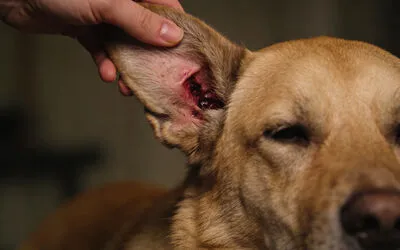
Dog Ear Infections That Keep Coming Back: Is It Food?
Recurring ear infections are one of the strongest clinical signals of food sensitivity in dogs. Learn why they keep coming back and how to find the dietary trigger.
Read Article →