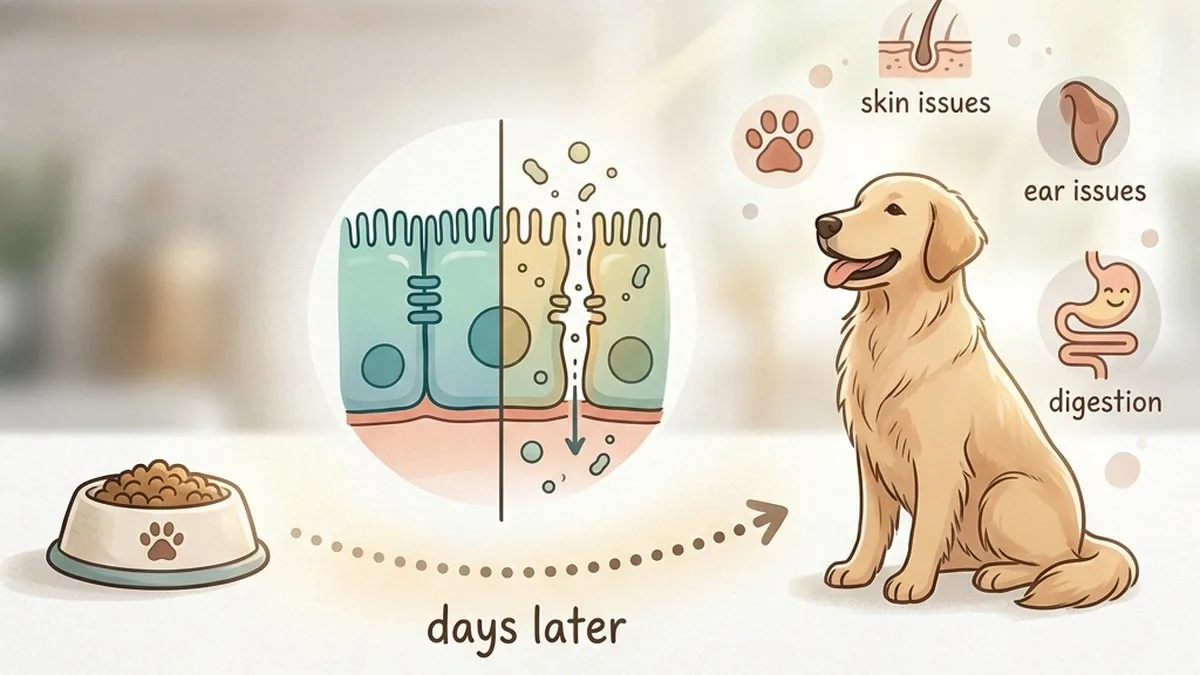
"Leaky gut" is a popular label — not a veterinary diagnosis. What sits underneath it is real and measurable: food-driven inflammation can compromise the intestinal barrier and shift the balance of bacteria living in your dog's gut (dysbiosis). The catch is that the food your dog ate and the symptom you notice are often days apart — so the two never look connected. You blame the new treat, or the weather, or "just his stomach," because nothing in the moment points backward to Tuesday's dinner.
You can't fix a chain you can't see. This guide teaches the mechanism once — the food load that drives inflammation, and the way that inflammation can wear down the gut barrier and unbalance the microbiome — and then shows you how to track the food-to-symptom pattern so it stops being invisible. If your dog has scattered, recurring issues (itchy skin, ear gunk, anal gland trouble, yeasty paws) that no single vet visit has managed to tie together, this is the mechanism that connects them.
What "Leaky Gut" and Dysbiosis Actually Mean (and What They Don't)
Your dog's gut lining is a barrier by design. It's built to let digested nutrients through into the bloodstream while keeping larger food proteins, bacteria, and bacterial byproducts out. The cells that make up that lining are held together by structures called tight junctions — think of them as the seals between bricks in a wall.
When that barrier is working normally, it's selective. When it's compromised — through sustained inflammation, illness, or chronic irritation — those seals loosen, and things that should stay contained (larger, partially digested food fragments; bacterial fragments) can cross more easily than they should. That's the barrier-dysfunction half of the pattern described in this guide's opening.
The other half is dysbiosis: a shift in the balance of bacterial populations living in the gut, away from the beneficial, short-chain-fatty-acid-producing species and toward less helpful ones. Barrier dysfunction and dysbiosis tend to travel together and reinforce each other — a less selective barrier changes what feeds the bacterial community, and an unbalanced bacterial community further erodes the barrier.
What this is not: a single named disease with one lab test and one cure. It's a mechanism — a pattern of dysfunction that can accompany a range of underlying triggers, most relevantly for this guide, sustained food-driven inflammation.
How Food Load Drives Inflammation → Barrier Permeability
Food triggers/allergens are a well-documented driver of adverse reactions in dogs — beef, dairy, chicken, and wheat account for the majority of identified trigger proteins in veterinary dermatology studies (Mueller, Olivry & Prélaud, 2016). "Food load" is the cumulative exposure to those trigger proteins across everything your dog eats: main meals, treats, table scraps, flavored medications — not just the bag of kibble.
Repeated exposure to a trigger protein activates immune tissue that sits right alongside the gut lining, producing low-grade, sustained inflammation. That inflammation is the mechanical link to barrier permeability. Early evidence suggests this connection extends beyond the gut itself: dogs with atopic dermatitis — a primarily skin-presenting sensitivity/allergic condition — have been found to have significantly elevated biomarkers of intestinal damage (TFF-3 and intestinal alkaline phosphatase) compared to non-atopic dogs, even when their main visible symptom is itching rather than digestive upset (Ekici & Ok, 2024). This is early, single-study evidence (26 atopic dogs vs. 10 controls) and should be read as emerging, not settled — but it points toward the same conclusion dermatologists have suspected for years: skin and gut inflammation are connected through a shared immune and barrier system, not two separate problems.
On the other side of the loop, chronic gastrointestinal inflammation itself drives dysbiosis — measurably reducing the populations of beneficial bacteria that produce short-chain fatty acids, compounds that are themselves important for maintaining gut barrier integrity (Pilla & Suchodolski, 2021). That creates a self-reinforcing cycle: food load drives inflammation, inflammation compromises the barrier and unbalances the microbiome, and the resulting dysbiosis further erodes barrier integrity — making the gut more reactive to the next trigger exposure.
The Downstream Symptom Map — Where This Shows Up
Because the underlying mechanism sits at the gut barrier and the immune system, it doesn't stay contained to one organ or one symptom. This is exactly why owners struggle to connect the dots — the same root cause can surface in several different, seemingly unrelated ways:
- Skin — chronic or recurring itch, hot spots, recurrent yeast overgrowth
- Ears — recurring ear infections or excess ear wax and odor
- Anal glands — recurring fullness, impaction, or gland-related discomfort
- Digestion — soft stool, gas, intermittent diarrhea, or an unsettled appetite
- Behavior/energy — low-grade lethargy or irritability, even aggression that's easy to write off as "just his personality"
None of these symptoms, on their own, points a finger at food. That's the trap. A dog scratching his ears looks like an ear problem. A dog with soft stool looks like a stomach bug. A dog with recurring anal gland issues looks like an anatomy problem. Viewed separately, each gets its own vet visit and its own local fix — a cleaning, an ointment, an antibiotic course — without anyone stepping back to ask whether they share a cause. We cover the organ-specific detail on chronic diarrhea and pancreatitis-linked GI issues separately (see pancreatitis and food triggers), and the gut-brain side of this same axis in how food affects behavior — this hub is where the underlying barrier/dysbiosis mechanism lives, so future articles on anal gland issues, chronic diarrhea, and feline IBD build on what's explained here rather than re-explaining it.
Why You Can't See the Food-to-Symptom Chain Without Tracking
Here's the part that makes this genuinely hard to catch in real time: the food and the symptom are usually separated by days. In a systematic review of food-challenge outcomes in dogs, the median time to a cutaneous (skin) flare after a dietary trigger was five days — and a meaningful share of dogs took longer than that (Olivry & Mueller, 2020). Digestive symptoms can show up faster, but skin, ear, and gland-related symptoms routinely lag behind the meal that triggered them by days and even weeks.
That gap is exactly why the pattern stays hidden. Nobody remembers what was in the treat jar five days ago unless they wrote it down. By the time the ear starts weeping or the gland flares up again, the triggering food has already been forgotten, reintroduced, or blamed on something else entirely — the new grass, the groomer, the weather. The chain is real, but it's invisible without a record.
What to Track (and How to Read It)
To see the food-to-symptom chain, you need two parallel logs running over the same window of time, long enough to catch a lag of several days.
What to log on the food side:
- Exact formula of the food (even for raw — every protein and amount should be logged)
- Every treat, chew, and table scrap — these are frequently the actual trigger, not the base diet
- New foods or ingredients introduced, with the date
- Any supplements or flavored medications
What to log on the symptom side:
- Skin — itch level, redness, hot spots, coat condition
- Ears — odor, discharge, head-shaking or scratching
- Digestion — stool consistency, gas, appetite changes
- Anal glands — scooting, fullness, discomfort
- General — energy level, restlessness
The window and the read: Log daily for at least four to six weeks — long enough to capture more than one exposure to any given food and more than one lag window. When you look back, you're not looking for a symptom the same day as a meal; you're looking for a cluster of symptoms appearing three to seven days after a specific food or ingredient shows up, especially if that cluster repeats after the same food reappears later. A single coincidence isn't a pattern. A repeated one is worth paying attention to.
The Elimination Trial as a Diagnostic Tool
Once you've logged enough of a pattern to have a suspect food (or once tracking alone hasn't given you a clear answer), the elimination trial is the standard next step — but it's worth being precise about what it is and isn't. An elimination diet is a diagnostic tool, not a treatment or a cure. It's a structured process of removing suspect ingredients, then reintroducing them one at a time under close observation, to identify which specific foods your dog reacts to. We cover the full protocol — timing, novel-protein selection, and how to run reintroduction — in our dedicated guide: Dog Elimination Diet & Tracking. We won't re-teach that protocol here; this hub is about the mechanism the elimination trial is designed to investigate.
When to See Your Vet
Tracking and elimination trials are tools for identifying patterns in otherwise-healthy dogs with chronic, low-grade symptoms — they are not a substitute for veterinary care when something more serious is going on. See your vet promptly, rather than starting or continuing a tracking-and-elimination process alone, if you notice:
- Bleeding, whether in stool, vomit, or from the skin
- Unexplained or rapid weight loss
- Persistent vomiting or diarrhea, especially if it doesn't resolve in a day or two
- Sudden, severe, or rapidly worsening symptoms
- Signs of anaphylaxis, collapse, or rapid deterioration — this is an emergency
Chronic gut and skin symptoms can have causes beyond food-driven inflammation — parasites, bacterial infections and structural conditions all need to be ruled out or specifically treated by a veterinarian. Tracking is what helps you bring a clear, dated record to that vet visit — it doesn't replace it.
Frequently Asked Questions
Can a vet officially diagnose gut-barrier dysfunction in dogs?
Not as a standalone diagnosis — there's no single blood test or scan that confirms the popular lay term. Vets can measure related markers in research settings (like intestinal damage biomarkers) and can diagnose the underlying conditions that often accompany barrier dysfunction, such as food allergies, inflammatory bowel disease, or chronic enteropathy. Barrier dysfunction and dysbiosis are best understood as a mechanism underlying those diagnosable conditions, not a diagnosis in themselves.
How long does an elimination trial take to show results?
Timelines vary by symptom type and are covered in detail in our elimination diet guide. In general, digestive symptoms can respond faster than skin symptoms, which often take longer to fully resolve. This is one more reason a dated tracking log matters — you need to know what "faster" and "longer" actually looked like for your dog, not guess from memory.
Can dysbiosis cause skin symptoms, not just digestive ones?
Yes — this is one of the more counterintuitive parts of the mechanism. Because the gut barrier, immune system, and inflammation pathways are connected, allergic inflammation that originates from food can show up primarily on the skin even when the gut itself isn't the loudest symptom. Emerging research has found gut-barrier changes in dogs whose main presenting symptom was skin-related, not digestive (Ekici & Ok, 2024).
What's the difference between a food allergy and a food sensitivity?
A food allergy is an immune reaction that tends to show up quickly; a food sensitivity is a delayed reaction that can take days and even weeks to appear, which is why it's so easy to miss without tracking. We cover this distinction in full in Food Allergy vs. Sensitivity in Dogs.
Is dysbiosis reversible?
Dysbiosis can improve when the drivers behind it — chronic inflammation, ongoing exposure to trigger foods — are reduced. "Managed," not "cured," is the right frame: it's an ongoing balance to maintain rather than a one-time fix, and what keeps it balanced can change over time as your dog ages or as other health factors shift.
Is gut-barrier dysfunction the same thing as an upset stomach?
No. A one-off upset stomach is usually a short, self-limiting event — something your dog ate, a brief bug. The barrier and dysbiosis mechanism described in this guide is about a chronic, low-grade pattern that recurs over weeks and months and shows up across multiple symptom types, not a single bad day.
References
- Ekici K, Ok M. 2024. "Investigation of the relationship between atopic dermatitis of dogs and intestinal epithelial damage." Veterinary Medicine and Science, 10(3):e1453. PMC11034634. [Emerging evidence — single study, n=26 atopic dogs vs. 10 controls.]
- Mueller RS, Olivry T, Prélaud P. 2016. "Critically appraised topic on adverse food reactions of companion animals (2): common food allergen sources in dogs and cats." BMC Veterinary Research, 12:9. PMID: 26753610.
- Olivry T, Mueller RS. 2020. "Critically appraised topic on adverse food reactions of companion animals (9): time to flare of cutaneous signs after a dietary challenge." BMC Veterinary Research, 16:168. PMID: 32448251.
- Pilla R, Suchodolski JS. 2021. "The gut microbiome of dogs and cats, and the influence of diet." Veterinary Clinics of North America: Small Animal Practice, 51(3):605-621.
Veterinary disclaimer: This article is for educational purposes only and does not constitute veterinary advice. Always consult with a qualified veterinarian before changing your pet's diet or discontinuing any prescribed treatments. Persistent itching, ear infections, skin irritation, and digestive upset can have multiple causes — including environmental allergens, parasites, bacterial or yeast infections, inflammatory bowel disease, and structural conditions — some of which require specific veterinary treatment. Persistent or severe symptoms should always be evaluated by a veterinary professional. This article does not replace a professional veterinary examination. If you observe signs of anaphylaxis, severe vomiting, collapse, or rapid deterioration, seek emergency veterinary care immediately.
Related Articles
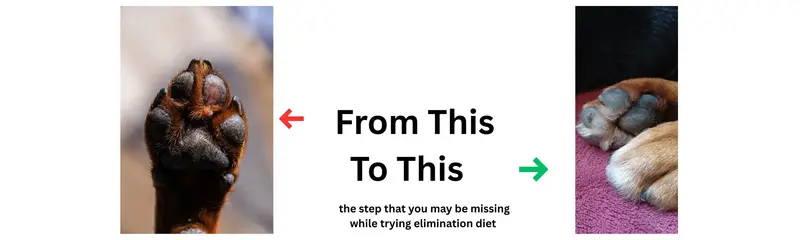
The Dog Elimination Diet: How to Actually Track It
The 8–12 week protocol, every failure point, and how structured tracking turns a long trial into a readable answer.
Read Article →
Dog Pancreatitis, Colitis and Food Triggers
When gut inflammation gets organ-specific. What separates a one-off flare from a food-driven pattern — and what to log for your vet.
Read Article →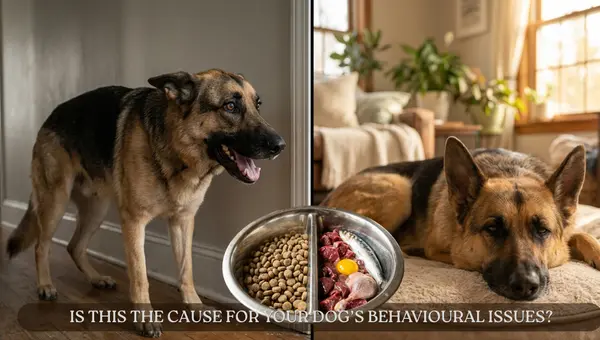
How Your Dog's Food Affects Their Behavior
The gut-brain side of the same axis. Why food-driven inflammation can show up as anxiety, reactivity, or a flat mood — days later.
Read Article →