
You know the routine by now. A raw, angry patch of skin appears — seemingly overnight. Your dog is licking, scratching, biting at the same spot until the fur is gone and the skin underneath is red, moist, and painful. You call the vet. They prescribe antibiotics, maybe a topical spray, possibly a cone. It heals. You breathe.
Then three weeks later, another one.
You've done the medicated shampoos. You've kept the coat dry after baths. You've switched food brands — twice. You've spent hundreds at the vet and you're running out of ideas. If this sounds like your life, you're not lazy, and you're not doing anything wrong. You've been treating the symptom. What nobody has told you is that the problem might not be on your dog's skin at all.
It might be in the bowl.
What's Actually Behind Your Dog's Hot Spots
Hot spots — technically called acute moist dermatitis — start when something irritates your dog's skin enough to trigger scratching, licking, or biting. Bacteria that normally live on the skin surface get into the damaged area, multiply fast in the warm, moist environment, and within hours you have a red, oozing, painful patch that seems to appear from nowhere.
The surface triggers are real. Moisture trapped under a thick coat after swimming. A flea bite. A scrape from rough play. But here's the question most hot spot articles skip past: why is your dog's skin so inflamed and vulnerable in the first place?
For many dogs, the answer is a food sensitivity creating chronic, low-grade inflammation from the inside out. The skin is your dog's largest organ, and it's often the first place that internal inflammation shows up. When your dog's immune system is quietly reacting to something in their food — day after day, meal after meal — the skin becomes a tinderbox. Any small irritation can spark a hot spot because the inflammatory response is already running in the background.
The most common food triggers in dogs include:
- Beef — the single most common trigger, accounting for roughly 34% of reported adverse food reactions in dogs
- Dairy — the second most common trigger (17%), often overlooked in treats, chews, and supplements
- Chicken — the third most common (15%), and it's hiding in almost every commercial dog food, treat, and supplement
- Wheat — the fourth most common (13%), though going grain-free isn't automatically the answer
- Eggs — frequently used as a binder in commercial foods
- Soy and legumes — common fillers, especially in grain-free formulas
Every dog is different. Your dog's trigger might be one of these, or it might be something else entirely. The point isn't to memorise a list — it's to understand that something specific in your dog's food could be driving the inflammation that makes hot spots keep coming back.
Why the Usual Treatments Don't Last
Let's be honest about what you've already tried, because you've tried a lot.
Antibiotics kill the bacteria in the hot spot. They work. The infection clears, the skin heals. But antibiotics don't address why the skin was inflamed enough to get infected in the first place. The underlying fire is still burning.
Topical sprays and creams soothe the surface. They reduce the itch, keep the area clean, and help healing along. But they're treating skin that will become inflamed again if the trigger is still present.
Medicated shampoos can calm irritated skin across your dog's whole body. They're helpful during a flare. But if your dog's immune system is reacting to Tuesday's dinner, no shampoo is going to stop that reaction from reaching the skin by Friday.
Switching food brands feels like the obvious move. And it might be — if you land on a food that happens to exclude your dog's trigger. But most food switches are random. You pick a new bag because the label says "sensitive skin" or "limited ingredient" or because a friend recommended it. The new food might contain the same trigger protein in a different form. Chicken fat is still chicken. "Natural flavour" on the label can be almost anything. Without knowing what you're actually eliminating, switching brands is a shot in the dark.
Steroids — prescribed for more severe or chronic cases — suppress the immune response. They can bring dramatic relief. But they're managing inflammation, not removing its cause. And long-term steroid use comes with its own concerns.
None of these treatments are wrong. They all have a place. But they're all treating the effect, not the cause. That's why the hot spots keep coming back. The trigger food is still in the bowl, and your dog's body keeps reacting to it.
The Delayed Reaction — Why You Can't See the Connection
This is the part nobody tells you. And once you understand it, everything about your dog's hot spot history will suddenly make sense.
When most people think "food allergy," they picture an immediate reaction — hives within minutes, vomiting right after eating, a swollen face. Those reactions exist in dogs, but they're the minority. The far more common response is a delayed food sensitivity — and it works on a completely different timeline.
Here's what actually happens inside your dog's body:
Your dog eats a trigger food on Monday. The immune system recognises a protein it's sensitised to and begins a slow-building inflammatory response. This isn't the dramatic, immediate IgE-mediated reaction you'd notice right away. It's a quieter process — a type III or type IV hypersensitivity reaction that unfolds over days, not minutes. By Wednesday, inflammation is building. By Thursday, it reaches the skin. By Thursday night or Friday, your dog is scratching at a spot that feels hot and irritated. By Saturday morning, you've got a full-blown hot spot.
You treat it. Spray, antibiotics, cone. It heals over the next week. You're relieved.
But your dog ate chicken kibble on Monday. And Tuesday. And Wednesday. And every day that week while the hot spot was healing. And every day since.
Five days later, another hot spot.
This is the cycle. And it's invisible without data, because when cause and effect are separated by days — sometimes up to two weeks — your brain simply cannot connect them. You blame the weather. The humidity. The swimming. The grass in the backyard. You never think to suspect Tuesday's dinner for Friday's hot spot — because why would you? The timing doesn't seem related.
This isn't a failure of attention or intelligence on your part. It's a failure of information. Veterinary dermatology research confirms that non-IgE-mediated food sensitivities in dogs can produce delayed reactions — with a median of about five days, and some dogs taking up to fourteen days to show signs. During diet challenge testing, veterinary dermatologists expect skin symptoms to return within one to fourteen days of reintroducing the offending food.
That window — days between eating the food and seeing the reaction — is exactly why your dog's hot spots seem random. They're not random. There's a pattern. You just can't see it without a record of what went in and what showed up.
Why DIY Elimination Diets Usually Fail
If you've already tried an elimination diet — or at least tried switching to a "hypoallergenic" or "limited ingredient" food — you might be thinking: I already did this, and it didn't work.
But the elimination diet itself probably wasn't the problem. How it was done might have been. Here's why most DIY attempts fail:
You reintroduced too early. You saw two or three good days and thought the new food was working. But given the delayed reaction window, the old trigger might still have been clearing your dog's system. Two calm days doesn't mean the inflammation cycle has broken — it might mean you're in the gap between the last reaction fading and the next one building. Veterinary guidelines recommend staying on a strict elimination diet for a minimum of eight weeks — and up to twelve weeks for full resolution — because some dogs take that long to show improvement.
You relied on memory instead of records. Three weeks into a diet change, can you remember exactly what your dog ate on Day 4? What about the treats your partner gave? The dental chew? The flavoured medication? Human memory compresses and distorts over days and weeks. Without a daily log, you're guessing at your own experiment's data.
The "limited ingredient" food still contained the trigger. This is more common than you'd think. Chicken fat can still contain trace chicken protein — enough to trigger reactions in some sensitive dogs. "Animal digest" or "natural flavour" on a label can come from almost any protein source. Some limited ingredient diets still contain four or five protein sources. If one of them is your dog's trigger, the label won't save you.
Treats, supplements, and table scraps weren't accounted for. The elimination diet only works if everything that goes into your dog's mouth is controlled. One chicken-flavoured dental stick can restart the entire inflammatory cycle. One well-meaning family member sneaking a piece of cheese can undo two weeks of clean eating.
There was no baseline to compare against. Without data from before the diet change, how do you know if things actually got better, worse, or stayed the same? Feelings are unreliable over weeks. Data isn't.
The elimination diet isn't wrong. It remains the gold standard for identifying food sensitivities in dogs — even veterinary dermatologists agree on that. But without tracking, it's like running an experiment without writing down the results. You might get lucky. Most people don't.
What Systematic Tracking Looks Like (It's Easier Than You Think)
Effective food-symptom tracking doesn't require a veterinary degree or a spreadsheet with forty columns. It requires consistency and a simple daily habit.
Here's what it involves:
Log every meal. The protein, the brand, any extras. If you're raw feeding, note the specific proteins. If you're feeding kibble, note the brand and flavour. Include treats, supplements, chews, and anything else that goes in your dog's mouth. Yes, including the bit of your sandwich they stole off the counter.
Log symptoms daily. Hot spots — where on the body, how severe. Scratching — how frequent, which areas. Ear issues, paw licking, digestive symptoms, energy levels, coat quality. You don't need to write an essay. A quick note each day is enough.
Do this consistently for 30–45 days minimum. The patterns won't be obvious after three days. They probably won't be obvious after ten. But somewhere around the three- to six-week mark, a picture starts forming. Which foods were consumed in the days before each flare? Which proteins correlate with calm, comfortable skin? Which weeks had no hot spots — and what was your dog eating during those weeks?
This takes under two minutes a day. It's not a research project. It's a habit — like feeding itself. You feed your dog, you log what they ate, you note how they're doing. Done.
What to Expect in the First 14 Days
If you start tracking today, here's what the timeline typically looks like:
Days 1–7: Building your baseline. The hot spots don't stop immediately — you're gathering information, not applying a fix yet. Every meal logged, every symptom noted. This is the foundation. You might feel like nothing is happening. Everything is happening — you're building the dataset that will reveal the pattern.
Days 7–14: Timing patterns start to emerge. You may begin to notice that hot spots or scratching episodes cluster around certain days. You might see that flare-ups tend to appear a consistent number of days after specific meals. This is the delayed reaction window becoming visible for the first time.
Days 14–30: Suspect foods start to surface. With two to four weeks of data, you have enough information to start identifying which foods correlate with calm skin and which correlate with flare-ups. This is when a targeted elimination becomes possible — not a random food switch, but a specific, data-informed removal of a suspect protein.
Days 30–45+: Confirmation. With the suspect food removed and tracking continuing, you'll see whether the hot spots slow down, stop entirely, or continue at the same rate. If they stop, you've likely found your trigger. If they continue, there may be another trigger to identify — and you've already got the tracking habit in place to find it.
When to See Your Vet (And What to Bring Them)
Tracking is not a replacement for your vet. Hot spots can develop serious secondary bacterial infections that need medical treatment. See your vet when:
- The hot spot is large, spreading rapidly, or producing discharge
- Your dog is in visible pain, refusing to eat, or unusually lethargic
- You see signs of infection — swelling, heat, foul odour
- Home care isn't improving things within 48 hours
- Your dog has multiple hot spots appearing at once
But here's where tracking changes the vet visit completely.
Instead of walking in with "he keeps getting hot spots and I don't know why," imagine walking in with 30 to 45 days of food and symptom data. You show your vet exactly what your dog ate in the days before each flare-up. You show them the pattern — that hot spots appear four to five days after meals containing chicken, but never after meals with turkey or venison. You show them the timeline of a suspected trigger being removed and the hot spots stopping.
Your vet wants to help. But they're working with whatever information you can give them in a fifteen-minute appointment. Six weeks of daily food and symptom data gives them a foundation for real, targeted guidance — not another round of antibiotics and a suggestion to "try a different food."
The Answer Has Been in the Bowl This Whole Time
You've tried the creams. The shampoos. The antibiotics. The food switches. The cones and the worry and the middle-of-the-night Googling. You've done everything a dedicated, loving pet owner would do — and the hot spots keep coming back.
They keep coming back because the trigger food is still in the bowl. And the delay between eating and reacting — days, sometimes up to two weeks — has kept the connection hidden.
Tracking is the piece that's been missing. Not more treatments. Not more vet visits for the same problem. Not another bag of food chosen by guesswork. Just a simple daily record that reveals what your dog's body has been trying to tell you all along.
Disclaimer: This article is for educational purposes only and does not constitute veterinary advice. Always consult with a qualified veterinarian before changing your dog's diet or discontinuing any prescribed treatments. Hot spots can have multiple causes — including bacterial infections, parasites, and environmental allergies — some of which require specific veterinary treatment. Persistent or severe hot spots should always be evaluated by a veterinary professional.
Related Articles

Why Does My Golden Retriever Keep Scratching? The Hidden Food Connection
Golden retriever itchy skin often has a hidden cause: food sensitivity with delayed reactions. Learn why your Golden scratches and how tracking reveals the real trigger.
Read Article →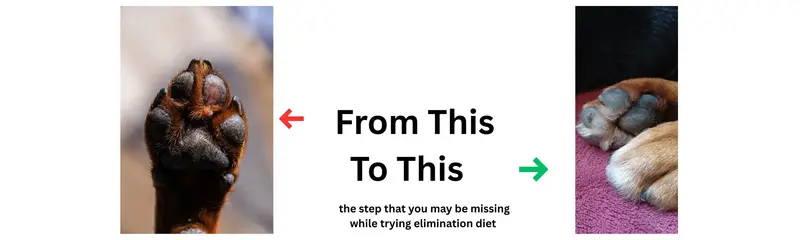
Your Dog's Elimination Diet Is Useless Without This One Step
Without consistent tracking, even the best elimination diet becomes a guessing game. Learn why tracking is essential for identifying your dog's food sensitivities.
Read Article →
Dog Food Allergy vs. Food Sensitivity: What's the Real Difference?
Your dog is itching and your vet mentioned food allergy. Learn the real difference between food allergy, sensitivity, and intolerance in dogs — and why it matters for diagnosis.
Read Article →