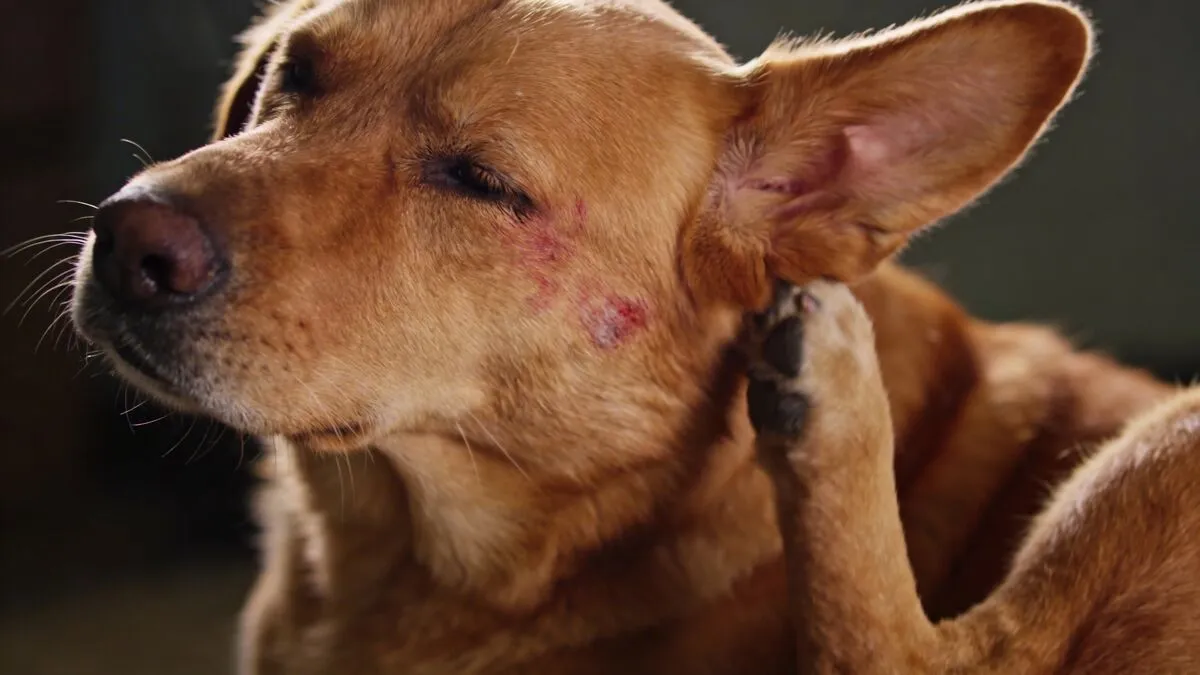
You've checked. Thoroughly. No fleas. No flea dirt. Your vet confirmed it. And yet your dog scratches constantly — morning and night, through every season, through every shampoo and supplement and diet switch you've tried.
It's exhausting to watch. And it's genuinely distressing for your dog.
Here's what most people in your position don't yet know: fleas are actually a minority cause of chronic itching in dogs. The majority of dogs who scratch persistently — with no flea infestation — are reacting to something else entirely. And the most overlooked of those causes is food.
Not obviously. Not immediately. But quietly, with a delay of days between what they ate and when the scratching intensifies, in a pattern that's nearly impossible to spot without consistent tracking.
Let's go through the real causes — and then talk about how you actually identify which one you're dealing with.
Why This Matters: Chronic Scratching Is Not Trivial
Before the causes — a word on why this is worth solving properly, not just managing.
Persistent itching drives a cycle of skin damage. Constant scratching breaks the skin barrier, which allows bacteria and yeast to colonise. Secondary infections — bacterial pyoderma, yeast (Malassezia) overgrowth — produce more inflammation, which produces more itching. Hot spots develop. Ear infections become recurrent. What started as scratching becomes a multi-system skin condition that is genuinely painful and significantly reduces your dog's quality of life.
Every month the root cause goes unidentified is another month of that cycle repeating. That's worth the effort of finding the real answer.
The 7 Real Causes of Dog Itching Without Fleas
1. Food Sensitivity or Food Intolerance
This is the most underdiagnosed cause of chronic itching in dogs — and the one most worth investigating first, because it's both common and entirely fixable once identified.
Food sensitivities in dogs produce a sustained, non-seasonal inflammatory response that primarily shows up in the skin and ears. The mechanism: certain food proteins trigger an immune response that drives systemic inflammation, which disrupts the skin barrier and promotes secondary infections.
The most common trigger proteins in dogs are beef (implicated in roughly 34% of adverse food reactions), dairy (17%), chicken (15%), and wheat (13%). But any protein a dog has been repeatedly exposed to can become a trigger over time — including proteins that were previously well tolerated.
The critical detail that most owners miss: food reactions in dogs are delayed by days, not hours. A dog who eats a trigger protein on Monday may not show increased scratching until Thursday or Friday. This is why owners who've tried switching foods often conclude "that wasn't it" — they were looking for an immediate reaction that never comes. Humans experience the same delayed reactions — learn more about food sensitivities in humans.
How to investigate: A strict single-protein novel elimination diet for 8–12 weeks is the only validated method for diagnosing food sensitivity in dogs. Blood tests, saliva tests, and hair tests for food sensitivity in dogs have no scientific validation. Tracking food and symptoms throughout the process is what makes the results interpretable.
2. Environmental Allergies (Atopy)
Canine atopic dermatitis (atopy) is an inherited inflammatory skin condition driven by sensitivity to environmental allergens — pollen, dust mites, mould, grass, and similar substances. It's one of the most common chronic skin conditions in dogs and affects certain breeds with significantly higher frequency, including Labrador Retrievers, Golden Retrievers, West Highland White Terriers, Bulldogs, and Boxers.
The distinguishing feature of atopy is its seasonal pattern — or at least, it starts seasonal. Many dogs are initially only symptomatic during specific pollen seasons, but over years of sensitisation, atopy can become year-round.
Key difference from food sensitivity: atopy typically involves the face, paws, ears, and belly; food sensitivity more often produces the "ears and rears" pattern (itchy ears plus rear-end licking or scooting). In practice, many dogs have both simultaneously, which complicates diagnosis significantly.
Diagnosis: Intradermal skin testing by a veterinary dermatologist is the gold standard. Serum allergy testing exists but is less reliable — results vary between laboratories and false positives are common. It is typically only used when intradermal testing cannot be performed.
3. Contact Dermatitis
Contact dermatitis is a localised skin reaction to something the dog physically touched. Common triggers include certain grasses, garden chemicals, cleaning products used on floors or bedding, synthetic fabrics, rubber or plastic (including food bowls), and some topical products.
The pattern is usually localised: itching, redness, or hives in the area that contacted the substance — belly, paws, and muzzle if the dog lies on grass or treated surfaces; face and chin if the trigger is a food bowl material.
Investigation: Remove obvious environmental contacts one at a time and observe for change. Switch plastic or rubber food and water bowls to stainless steel. Wash bedding with unscented detergent. Review garden chemical use.
4. Dry Skin and Nutritional Deficiency
Dogs can develop chronically dry, flaky, itchy skin from inadequate fat intake, omega-3 fatty acid deficiency, zinc deficiency, or dehydration. This is more common in dogs fed certain commercial diets that are low in animal fat, or in cold, low-humidity climates.
Dry skin itching tends to be mild-to-moderate and diffuse (all over rather than concentrated in specific areas), often accompanied by visible flaking and a dull, brittle coat.
Investigation: Assess diet for fat content and omega-3 sources. Adding oily fish (sardines, mackerel — fresh or canned in water) several times per week, or a fish oil supplement calibrated to body weight, often produces noticeable improvement within 4–8 weeks if fat deficiency is the cause.
5. Yeast Overgrowth (Malassezia Dermatitis)
Malassezia pachydermatis is a yeast naturally present on dog skin. In healthy dogs, the immune system keeps it in check. But when the immune system is compromised — and the skin barrier is disrupted — Malassezia can proliferate to levels that cause significant symptoms: intense itching, a characteristic musty or "corn chip" odour, greasy or thickened skin, rust-coloured staining around the paws from saliva, and recurrent ear infections with dark, waxy discharge.
This is important: yeast overgrowth is almost always secondary to another cause, not a primary condition. Food sensitivities trigger systemic immune responses that both dysregulate the immune system and disrupt the skin barrier — creating a double opening for Malassezia to flourish. Treating the yeast (with medicated shampoos or antifungal medication) will provide temporary relief, but without addressing the underlying driver — usually food sensitivity or atopy — it will return.
If your dog has the classic musty smell and dark ear discharge, treat the yeast symptomatically while simultaneously investigating the root cause.
6. Mites (Sarcoptic or Demodectic Mange)
Sarcoptic mange (Sarcoptes scabiei) produces intense, sudden-onset itching, particularly around the ears, elbows, hocks, and belly. It's highly contagious to other dogs and, to a lesser extent, humans (causing a temporary, self-resolving rash). Sarcoptic mange is often strongly suspected when the itching is sudden, severe, and spreads rapidly.
Demodectic mange (Demodex canis) is caused by a different mite that normally lives in hair follicles in small numbers. Overpopulation — usually in young dogs or immunocompromised adults — causes patchy hair loss and mild itching, often starting around the face and eyes.
Both are diagnosable by skin scraping at your vet. Sarcoptic mange can be difficult to confirm because mites are often sparse in skin scrapings; a trial treatment with antiparasitic medication is sometimes used diagnostically.
7. Bacterial Skin Infection (Pyoderma)
Surface and superficial bacterial infections — usually caused by Staphylococcus pseudintermedius — are extremely common in dogs and frequently cause itching, papules (pimple-like bumps), crusting, and circular areas of hair loss with scaly edges. Pyoderma is almost always secondary to something else: atopy, food sensitivity, a hormonal imbalance (hypothyroidism, Cushing's), or any condition that disrupts the skin barrier.
Antibiotics will clear the infection, but it will recur if the underlying cause isn't addressed. If your dog has had multiple rounds of antibiotics for skin infections, identifying and resolving the root cause is the essential next step.
The Cause That's Most Often Missed — and Why
Look at the list above again. Most of the seven causes are either a sensitivity or a direct consequence of one. Food sensitivity and atopy are primary drivers. Yeast overgrowth and bacterial skin infections are almost always secondary to them. Contact dermatitis is a sensitivity to chemicals or materials. Even demodectic mange involves mites that are normally kept in check by a healthy immune system — and chronic sensitivity-driven inflammation can weaken that defence.
Yet of all these, food sensitivity is the one most consistently delayed in diagnosis. There are two reasons for this.
First, the delayed reaction window means the obvious clue — "she got worse right after eating that" — never appears. The reaction takes days to show, by which point the food has been forgotten.
Second, the standard test pet owners are offered — blood, saliva, or hair sensitivity panels — are not validated for food sensitivity in dogs. Multiple independent studies have shown that these tests produce unreliable results. They may return long lists of "reactive" foods that don't reflect actual clinical sensitivity, or clear a food that is genuinely causing problems. They can send owners on months-long elimination journeys chasing false positives.
The elimination diet trial — strict novel protein for 8–12 weeks, with careful tracking throughout — remains the only validated diagnostic method.
How Tracking Turns a Guessing Game Into Actual Answers
The reason most home elimination attempts fail isn't the approach — it's the absence of data.
When you track every meal, every ingredient, every treat, every supplement — alongside a daily record of scratch frequency, location, severity, skin condition, ear status, and behaviour — you build the picture that no single observation can give you.
Over 8–12 weeks, that data reveals:
- Whether symptoms are changing at all on the new diet (sometimes improvement is gradual and only visible in a graph)
- Whether a hidden ingredient in a "novel protein" food is breaking the trial
- Whether a reaction appears 3–5 days after a specific exposure
- Whether environmental seasonal factors are overlapping with food reactions
- What your dog's baseline actually looks like — so you know clearly when something changes during reintroduction
Without that record, the end of 10 weeks of effort produces a feeling, not a finding. "I think she's a bit better" is not the same as a clear pattern showing which proteins preceded the worst flare weeks.
What to Do Next
If your dog is scratching persistently with no flea infestation confirmed:
- See your vet to rule out sarcoptic mange and active bacterial or yeast infections. Treat any active secondary infections — don't try to run an elimination diet while your dog is actively infected, as ongoing infection confounds symptom tracking.
- Start a food diary immediately, even before committing to a full elimination trial. Simply logging what your dog eats and how they seem each day for two weeks will give you a baseline and may reveal early patterns.
- Consider a structured elimination diet in conversation with your vet or a veterinary dermatologist. Choose a protein your dog has genuinely never eaten before — kangaroo, venison, rabbit, and horse are good options if your dog has been on chicken or beef-based foods.
- Track consistently throughout the elimination and reintroduction phases. This is the single most important factor in whether the process produces useful answers.
- Be patient with the timeline. Skin symptoms in dogs can take the full 10–12 weeks to show meaningful change after triggers are removed. Giving up at week 6 discards the data from weeks 7–12, where the clearest changes often appear.
Your dog can't tell you where it hurts or what makes it worse. But with consistent tracking, their body can show you — over time and in data.
Data Sources
- Olivry T, Mueller RS. Critically appraised topic on adverse food reactions of companion animals (2): common food allergen sources in dogs and cats. BMC Vet Res. 2016;12:9.
- Olivry T, et al. Treatment of canine atopic dermatitis: 2015 updated guidelines from the International Committee on Allergic Diseases of Animals (ICADA). BMC Vet Res. 2015;11:210.
- Hensel P, Santoro D, Favrot C, Hill P, Griffin C. Canine atopic dermatitis: detailed guidelines for diagnosis and allergen identification. BMC Vet Res. 2015;11:196.
- Mueller RS, Olivry T. Critically appraised topic on adverse food reactions of companion animals (4): can we diagnose adverse food reactions in dogs and cats with serum IgE and IgG? BMC Vet Res. 2017;13:275.
- Mueller RS, Olivry T, Prelaud P. Critically appraised topic on adverse food reactions of companion animals (2): common food allergen sources in dogs and cats. BMC Vet Res. 2016;12:9.
- Tham HL. Elimination Diet Trials: Steps for Success and Common Mistakes. Today's Veterinary Practice. 2024.
- Purina Institute. Diet Elimination Trials. (Serum, saliva, and hair allergy testing are not reliable in dogs and cats.)
- Nuttall T. The genomics revolution: will canine atopic dermatitis be predictable and preventable? Vet Dermatol. 2019;30(2):93–e28.
Disclaimer: This article is for informational purposes only and is not a substitute for professional veterinary advice. Always consult with your veterinarian about your pet's specific health concerns.